



Step-By-Step: Epic Sacred Valley, Peru Via Ferrata Guide (With Ziplines!)
A Via Ferrata With 6 Ziplines…One Over 700 Meters?! Take My Money…NOW!
I’ll be honest—when I first heard about via ferratas on my buddy Jason’s Zero to Travel podcast, I had to do one. Little did I know that there was a via ferrata in the Sacred Valley of Peru, south of Cusco, where I was about to spend a few weeks. Done and done!
This was my first ever via ferrata, and the idea of hanging on steel cables over Peru’s epic cliffs sounded equal parts thrilling and slightly deranged, but I never had a doubt it might be a life-changing new adventure.
Spoiler Alert: it…was…amazing!


Hi I’m Jason!
I didn’t even see my 3rd country until age 40, then I was diagnosed with type 1 diabetes at 42…in the middle of Covid. This is where I share personal stories, deep thoughts, and travel shenanigans to encourage and empower others with a fear of travel, or of traveling with major medical conditions, to push through and live an unconventional life!

This site participates in the Amazon Services LLC Associates Program and other affiliate programs and may earn from qualifying purchases.
This via ferrata immediately quickly became one of my favorite things to do Sacred Valley—a half-day adventure packed with adrenaline, mountain air, and jaw-dropping views.
And there was plenty else I did during my time in Peru—like exploring the Ollantaytambo Ruins, hiking the Pisac Ruins in the rain, hitting 16,500ft at Rainbow Mountain, and the Maras Salt Mines and Moray.
If you’re an adventure traveler, a DIY explorer, or just someone looking to push your comfort zone, this via feratta is a must-do activity that’ll have you grinning all the way back on the break-neck roads back to Cusco.
If you’re a seasoned via ferrata climber, this “first-time” guide probably isn’t for you. But if the above gets you stoked, read on and let me know how your first via ferrata goes!
Without further ado, here’s your complete guide to what to expect if you do sign up for this epic half-day tour from Cusco, Peru!
BTW. Here’s the exact tour that I did:
The Approach: Safety, Instruction, & Stepping Up Onto The Wall
For this half-day adventure you’ll get picked up in Cusco, where transportation to the Sacred Valley is included, much like most day tours from Cusco Peru.
After about an hour and a half of driving through the sometimes-nauseating roads of the Andes, you’ll reach the base of the cliff. Your heart rate will probably spike a little when you spot the tiny ladders stretching up the first ascent.
Side note…don’t forget to always, always, always consider getting inexpensive travel medical insurance —sometimes as low as $2/day—for your trip, and a separate yearly evacuation insurance policy if you travel internationally often! And check out my list of tips for staying safe while traveling abroad.
 Our via ferrata guide giving safety instructions before we start.
- Safety first!
- The staging area.
- Part of the waiver for the via ferrata with ziplines
- Rebar steps, gloves, and clipped in and all safe.


Before you even touch the rock, your guides walk you through every piece of via ferrata equipment: the full-body harness, helmet, gloves, and the all-important lanyard system with two locking carabiners and an energy dissipator.
Connect & Share This Article

It’s the safety system that keeps you safely attached to the steel cables at all times…assuming you do what you’re told during the instruction!
If you’re wondering, “Is via ferrata safe?” the answer is *generally *yes—when done with professional instruction and proper gear. You’re always connected to the cable by at least one carabiner, so even if you miss a step, you won’t go anywhere but into your harness after a short fall. Are injuries during this via ferrata possible? Of course, but if you listen to and follow instructions, any missteps should cause minimal damage, lol.

After a quick safety talk and practice run, it’s time to hike about 100ft up to the wall, clip in and start the climb.
The first step is literally a 10-15ft metal ladder straight up the rock wall. Quite the introduction!

From there, steel rungs are set into the rock face itself, and within minutes you’re a few stories off the ground, realizing how different “steps” feel when they’re bolted into a cliff. Oh, and wait til you step on one that’s just a* little loose.* Good times!


First Ascent—Straight Up A Few Hundred Feet
This first vertical section of the via ferrata Cusco climb gets your adrenaline pumping right away.
All-in-all during the via ferrata you’ll ascend over 300 vertical meters!
The ladders and steel rebar steps are surprisingly sturdy, but the exposure—those vast drop-offs below—will make you very aware of your every move.
Each step upward rewards you with better and better views of the Sacred Valley: terraced farmlands below, jagged peaks in the distance, and the river snaking through it all. Your via ferrata guide will be along for the entire journey. We had 5 people on ours.
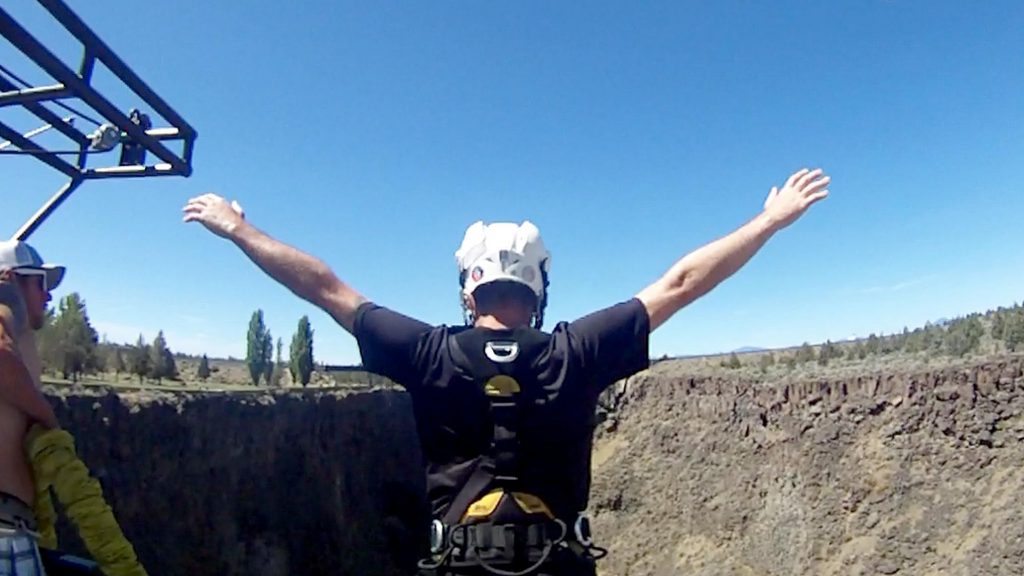
Thanks to my new friends from France and Australia for taking pics of me along the way!
Horizontal Traverse & Rope Bridge
Once you’ve conquered the first climb, you’ll start a horizontal traverse that lets you breathe a little easier. You’re still clipped in, of course, but now you’re moving sideways across the cliff, sometimes with your feet on small rock ledges and other times on steel steps drilled into the wall.
Then comes the rope bridge—two parallel cables strung across an airy gap between rock faces. Your feet walk the lower cable while your hands balance on the upper one. It’s a mental game of focus and trust, but crossing it is pure fun.
Pause in the center for a few seconds like I did and take in the view of the gorgeous Sacred Valley below. You’ve earned it!
- New friends hanging out with me over the Sacred Valley.
- Scaling the side of the Sacred Valley…
- A view of the Sacred Valley of Peru from the via ferrata.
- The suspension bridge on the via ferrata.


Second Ascent—Up A Few Hundred Feet More
After the rope bridge, you’ll face another vertical push—this time even higher than the first. It’s around this point where the wind picks up and you’re grateful for the early start, since the wind picks up as the day rolls on. Just look at the trees along the river leaning sideways for proof!
Pro tip: do this via ferrata as early in the morning as possible. The cliff face sits in shade until late morning, which means cooler temperatures and far less sweat while you’re working those quads.
Connect & Share This Article
The climb is steady and well-paced, with plenty of spots to rest, drink water, and take in the landscape and plenty of pictures. Remember to bring plenty of water or hydration and a small backpack with layers, since the higher you go, the chillier it gets especially in the shade.
And this via ferrata is rain or shine, so be ready for any elements Pachamama might throw at you.


Horizontal Traverse To Ziplines
Once you top out on the cliff, you’ll traverse again along the rock to reach the zipline platforms. This section is more relaxed—your arms get a break, and your adrenaline starts to shift from climbing mode to “holy crap, I’m about to fly” mode.
You’ll also stop for a minimal but welcome bagged lunch, with plenty of time to chat it up with new friends and take in the Sacred Valley views.
- Safety equipment along the via ferrata.
- View of the first zipline.
- Some local snacks while on the side of a mountain cliffs.
- The zipline safety rig.


6 Ziplines—700 Meters, 500 Meters, & More
The zipline portion is just as epic as the climb. There are six in total, ranging from shorter warm-ups to one run over 700 meters long, with another clocking at around 500 meters long. The speed, the view, the sensation of floating for over 35 seconds on the longest run is truly epic. Plenty of time to look around and take it all in!
Between each line, your via ferrata guides handle all the setup and safety checks, making sure you’re clipped and ready to go. It’s the perfect payoff after all that vertical effort. By the time you land on the final platform, if you’re like me, you’ll be wondering whether you can bribe the guides for another run at the entire route again!
Cusco Via Ferrata – When To Go & Weather Tips
The Sacred Valley has a distinct dry and wet season. The best time for this via ferrata tour is during the dry months, roughly April through October. You’ll get clear skies and minimal rain, though temperatures can swing dramatically between morning and afternoon.
I did this via ferrata in early October. While we dodged a couple raindrops, it was nearly perfect weather in the valley.
Mornings are best—hands down. The cliff stays shaded early, so you’ll climb in cooler conditions and avoid the intense midday sun. Even during the dry season, the wind can pick up at higher altitudes, so layers are your friend.
If you visit during the rainy season (November to March), plan accordingly since the Sacred Valley and Cusco get* a lot* of rain in their rainy season!
Safety, Equipment And Climbing Tips
Safety is the backbone of any via ferrata, and this one’s no different. Via ferrata equipment—from the harness to the helmet to the dual carabiner lanyard—is designed to keep climbers (…you) secure even on steep verticals.
Here are a few safety pointers from my first via ferrata experience:
- Always double-check your clips. Each time you move to a new cable section, make sure one carabiner is attached before unclipping the other. Your first mistake here could be your last, so don’t make a mistake! Slower is faster my friend.
- Listen to your guides. They know every rung, bridge, and zipline by heart.
- Pace yourself. It’s not a race; rest when you need to.
- Stay hydrated and eat snacks. Bring water, snacks, and don’t skip breakfast.
My two new friends had literally just flown in at midnight from over 30 hours of flights and were on the wall at 9am, followed by an Inka Trail and Machu Picchu trek. Please avoid this and make sure you’re acclimated and rested!
With professional via ferrata guides, a solid safety briefing, and good common sense, even first-timers like me can tackle this climb with little doubt.

Nice-To-Knows For First-Timers
If it’s your first time doing a via ferrata, here are a few simple but super-helpful tips to make your day go smoother:
- What To Wear: Lightweight, flexible clothing and closed-toe shoes like light hikers—with grip! No sandals or open-toed shoes allowed.
- Weather Layers: It gets cooler and windier as you climb—pack a light jacket or hoodie, and a rain shell just in case of rain.
- Water & Snacks: Probably two liters of water minimum. Or just front-load and take a liter onto the climb.
- Cameras: Bring a GoPro or chest-mounted camera if you want hands-free shots. But again, you’ll have plenty of places to safely stop and take pictures between climbs.

Wrapping Up This Via Ferrata Guide
If you’re searching for things to do in the Sacred Valley of Peru that combine adrenaline, sick views, and mild bragging rights, this via ferrata and zipline combo delivers. It’s an unforgettable way to experience the beautiful Sacred Valley of the Andes Mountains.
Whether you’re on one of the Cusco, Peru tours or planning your own day tours, this is one adventure worth slotting into your itinerary. Check out my full travel guide for more Cusco and Sacred Valley travel inspiration! I spent over a month in Cusco and did all the things!
Cheers!
—Jason


About Jason Robinson
Jason is the author of “The Beginner Traveler’s Guide” as well as the voice behind the words and the eye behind the lens for The Nomad Experiment. “Planning to travel at some point” wasn’t actually getting the job done, so nearing 40 he decided to make it a priority, nomatter how scary that was. A few years later—through the pandemic and a type 1 diabetes diagnosis at age 42—now living a life of nomadic travel, he’s speaking out to encourage others of any age, or with any serious medical diagnosis, to live an unconventional life.
Connect & Share This Article
Join the email list to stay in the loop on new releases!
This site participates in the Amazon Services LLC Associates Program and other affiliate programs and may earn from qualifying purchases.
Travel Planning Tips
Figure out where you are going & how are you getting there…
I suggest using at least 2 to 3 different travel search sites. Start with Skyscanner or Orbitz or Booking …or whatever aggregator site you prefer. Then when you see what airlines to use, check their respective sites for better deals or rewards flights.
Figure out where you’re going to stay…
If you’re interested in hostels, search Hostelworld or Hostelling International. For longer-term or more private digs, look at Airbnb, VRBO, colivings, or you can look for hotel rooms in the links from the search engines listed above.
Get comprehensive travel insurance, or in the least, travel medical insurance if internationally…
Especially with COVID not going anywhere, you need travel medical insurance nomatter what! Start with an insurance aggregator or with SafetyWing, World Nomads, or another. Then decide what is important to you; trip cancellation, baggage coverage, medical, or all of the above. And get a yearly evacuation plan, since you’ll have to get home after your emergency!
Need more resources? Click here!
FAQs: Frequently Asked Questions About the Via Ferrata in The Sacred Valley, Peru
How Hard Is the Sacred Valley, Peru Via Ferrata Climb?
It’s more intimidating than difficult — think steep ladders and solid footholds, it’s rock climbing, but not a free climb. If you can climb tiny steps or a tall ladder, you can handle this climbing route.
Is the Via Ferrata in Cusco Safe?
Yes. You’re fully harnessed, double-clipped at all times except during transfers—when you remove one clip and reclip it past an anchor—and guided by trained pros who do this daily.
What Equipment Is Provided?
Everything you need. A full via ferrata kit— climbing harness, helmet, gloves, and a special via ferrata lanyard with shock absorbers — should come included with the tour.
What Should I Wear for the Climb?
Comfortable, flexible clothing and closed-toe shoes with good grip. It gets cooler higher up, so bring a light jacket. Oh, and sunscreen.
How Long Does the Whole Adventure Take?
The full Via Ferrata and zipline combo usually lasts no more than 2–3 hours, including instruction, climbing, and descending.
What’s the Altitude of the Climb?
You’re in the Sacred Valley at the Urubamba river, which is at about 2,050 meters elevation for this via ferrata.
Can I Bring My Camera or GoPro?
Yes, but it must be securely strapped or mounted. Dropping it would definitely make the condors laugh. (Kidding. I didn’t actually see any condors.)
Are the Ziplines Included in the Via Ferrata Tour?
Yes…in this tour! Note that there are a few different via ferratas in the valley. Make sure you’re booking this one, since the others don’t seem quite as epic from what I’ve heard!
What’s the Best Season to Do the Via Ferrata in Cusco?
Dry season (April–October) is ideal. Clear skies and less rain.
Connect & Share This Article




Hello Jason.
Very good to hear from you, first time in a while. Sound =s lik eyou are again enjoying your travels. Keep having a blast, sharing with others.
We are doing well. While I’m staying busy, jane is recovering from a fall 1 weeks ago in which she broke her left hymerous up hight (bno cast, just a sling, with pain that still wakes her up. But she’s healed and dealing now with nerve pain.
Sadly our 8 year old much-loved Labrodoodle Max passed away in early September (heart tumor), so the house is quiet.
We’ll be hosting 12+ for Thanxgiving. Hope you remain Thankful wherever you are. Continued safe travels.
gary